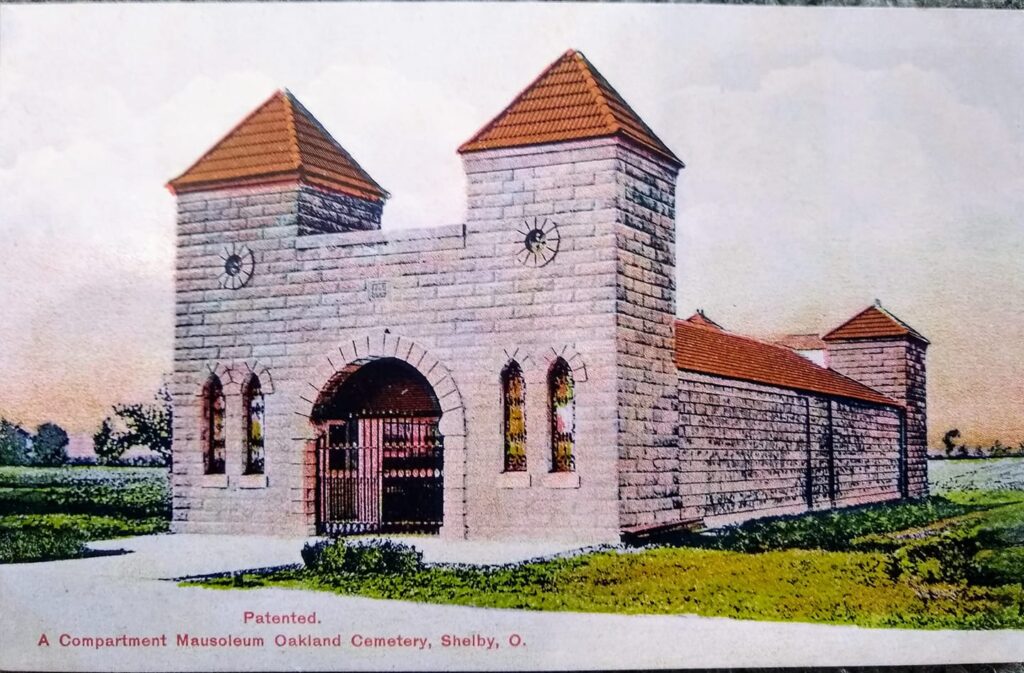
Designed by William I. Hood and John W. Chesrown, the Oakland community mausoleum was touted as “The Better Way” of burial. The Oakland Mausoleum was the fourth mausoleum built by Hood, and the second to be built in Ohio – Ganges was the first – based on the patent. He is credited with building more than 100 community mausolea in Ohio, Michigan, Indiana and Illinois, and as far as Iowa, Texas, Wisconsin and Washington, setting off a community mausoleum movement across the United States. Hood’s National Mausoleum Company was headquartered in Shelby for a time.
The mausoleum contains 240 crypts; 220 are occupied. The arched entrances were originally open to allow a horse-drawn hearse to pull through. Skylights providing natural light extend the length of the structure as there is no electrical power to the building.
Mausoleum Dedication May 24, 1908
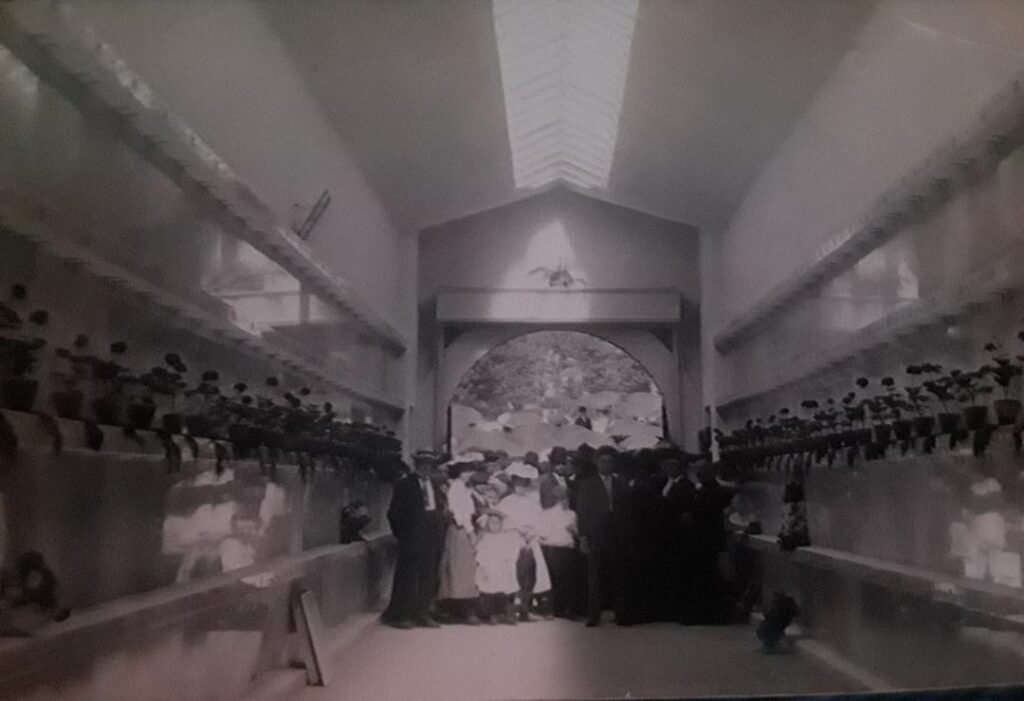
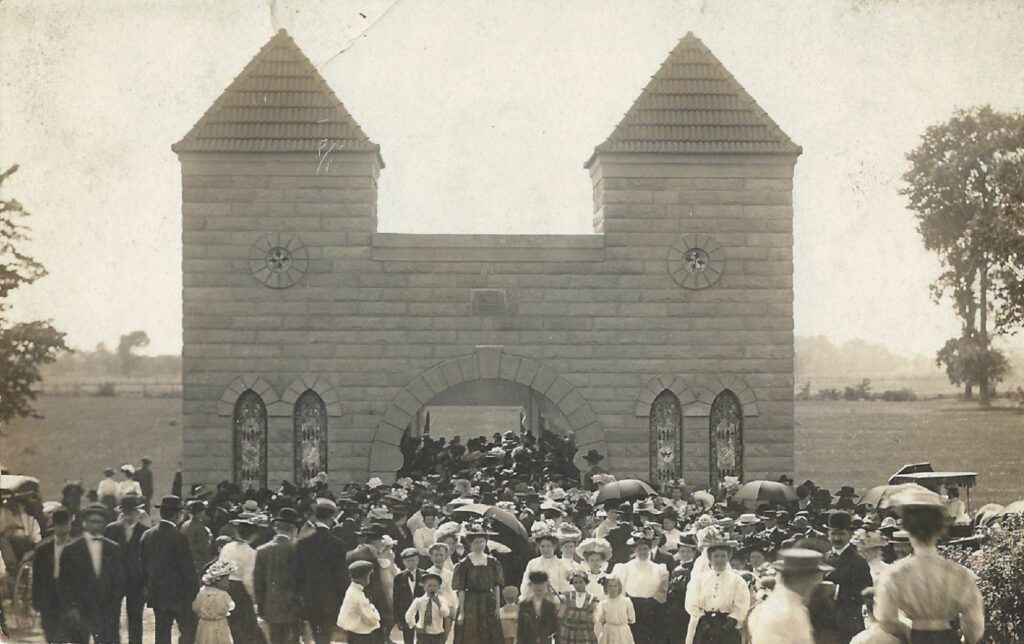
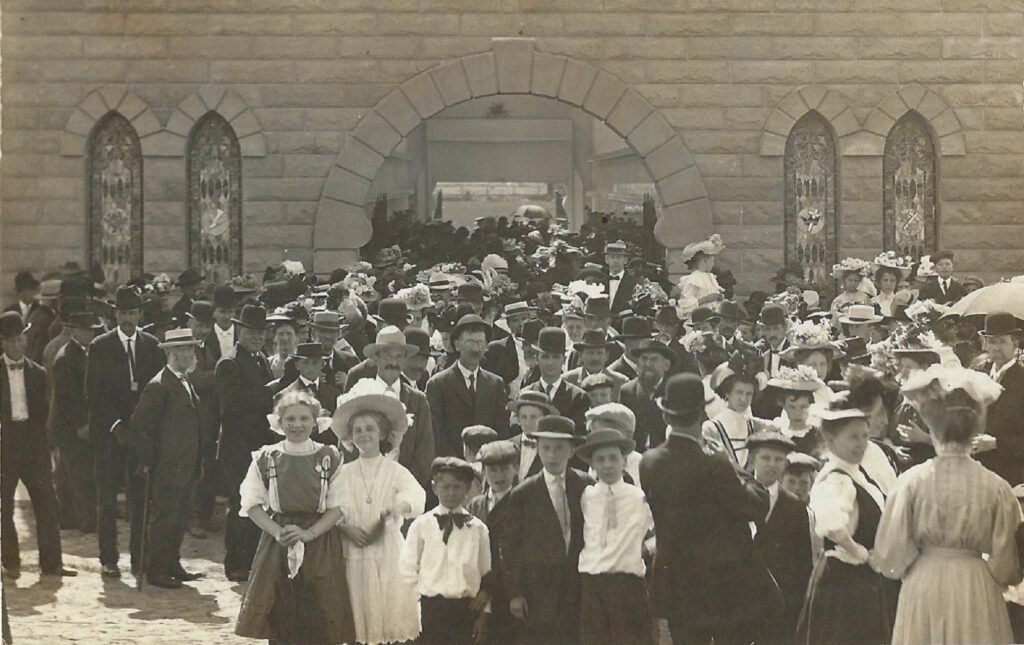
More than two-thirds of 240 available crypts had already been sold and five crypts were occupied when the mausoleum was dedicated May 24, 1908 in front of 3,000 townspeople, according to a newspaper account. The mausoleum was a place of interment for more than 80 years, from 1908-1989. There are still about 20 crypts open.
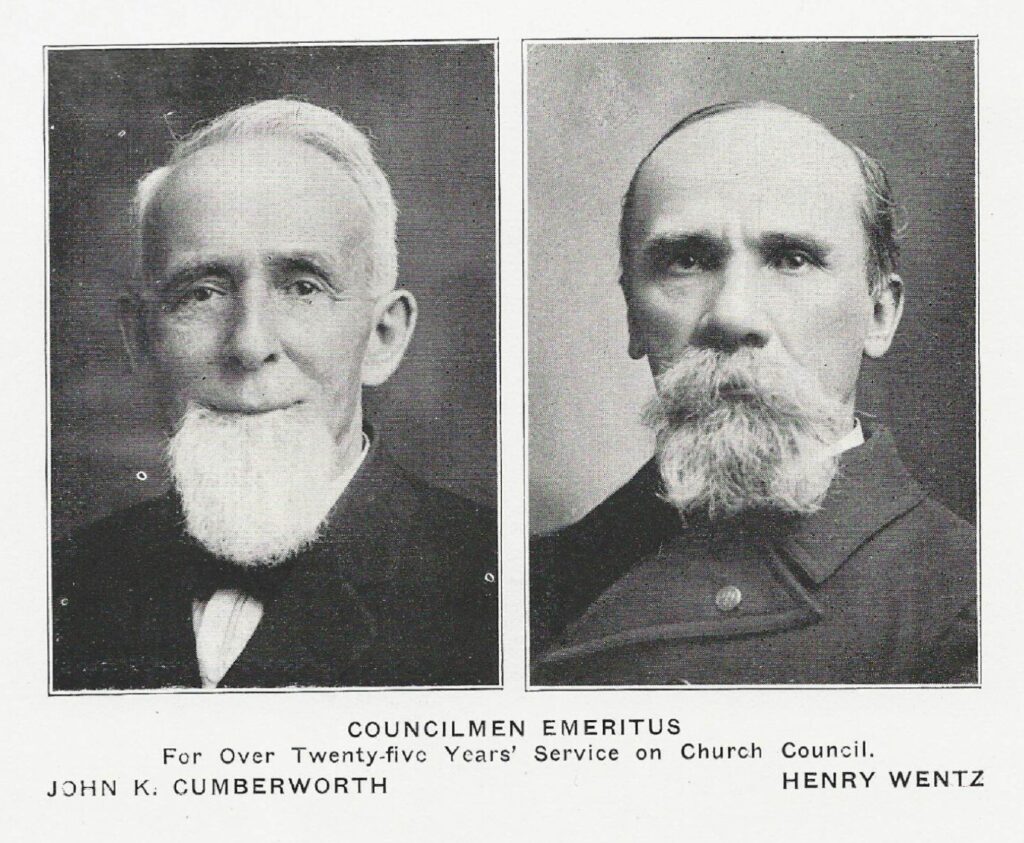
Unlike earlier burial chambers which only the rich and nobility could afford, the mausolea of the early 1900’s were designed so that those of modest means could afford it. The Shelby Oakland Mausoleum contains the remains of local well-known businessmen Henry Wentz and John K. Cumberworth, six veterans from the Civil War through the Korean war, as well as local farmers, and their wives.